
Professor Shuai Li IEEE Fellow University of Oulu, Finland | Biography: Prof. Li currently a full Professor with Faculty of Information Technology and Electrical Engineering, University of Oulu and also an Adjunct Professor with National Technology Research Center of Finland (VTT). His main research interests are nonlinear optimization and intelligent control with applications to robotics. He has published over 300 SCI indexed papers on peer reviewed journals, including more than 130 on IEEE transactions, with a total citation for 22,000+ and H-index for 86. He is Fellow of IEEE, IET and AAIA. Speech Title: Transformer based Deformable Object Manipulation Abstract: TBD |

Professor Yong Zeng IEEE Fellow, Young Chief Professor Southeast University, China | Biography: Yong Zeng, IEEE Fellow, Young Chief Professor of Southeast University and Purple Mountain Laboratory, Nanjing, China. He received the Bachelor of Engineering (First-Class Honours) and Ph.D. degrees from Nanyang Technological University (NTU), Singapore. From 2013 to 2018, he was a Research Fellow and Senior Research Fellow at the National University of Singapore (NUS). From 2018 to 2019, he was a Lecturer at the University of Sydney, Australia. Prof. Zeng was listed as Clarivate Analytics Highly Cited Researcher for 7 consecutive years (2019-2025), AI2000 Most Influential Scholars in the field of Internet of Things for 4 consecutive years (2021-2024), Stanford "Top 2% of Scientists in the World - Lifetime Influence". Prof. Zeng is the recipient of Australia Research Council (ARC) Discovery Early Career Researcher Award (DECRA), IEEE Communications Society Asia-Pacific Outstanding Young Researcher Award, and won 10 international and domestic best paper awards including IEEE Marconi Award (2020 and 2024), Heinrich Hertz Award (2017 and 2020), etc. Prof. Zeng proposed the concept of channel knowledge map (CKM), and his works have been cited by more than 36,000 times. He serves on the editorial board of SCI journals such as IEEE Transactions on Communications, IEEE Transactions on Mobile Computing, and IEEE Communications Letters, and leading guest editor of journals including IEEE ComMag, Wireless ComMag, China Communications, and Science China Information Sciences. Prof. Zeng was elevated to IEEE Fellow “for contributions to unmanned aerial vehicle communications and wireless power transfer”. Speech Title: 6G Intelligent Channel Knowledge Map Construction and Utilization with Generative AI Abstract: Existing wireless communication and sensing systems are mainly based on the traditional “environment-unaware” paradigm, which fails to fully exploit the prior information of the local wireless environment, resulting in inefficient environment sensing and channel acquisition. This makes it difficult to meet the future needs with the developing trends such as larger channel dimensions, higher node densities, and more cost-effective hardware. On the other hand, the recently proposed concept of channel knowledge map (CKM) aims to build channel knowledge foundations that learn the intrinsic characteristics of the local wireless environment by fusing massive historical data of all terminals in the area, thereby enables the direct acquisition of environmental priors in advance based on (virtual) terminal location information. This enables the paradigm shift from the traditional environment-unaware to the future environment-aware communication and sensing, offering new ideas for efficient environment sensing and channel acquisition. This talk will introduce the latest research progress in the construction and application of CKM. By discussing the basic principles of CKM, typical cases of communication and sensing based on CKM, the theories and methods of CKM construction based on generative AI, as well as preliminary experimental verification, we will try to answer the five fundamental questions about CKM (2W+3H): What is CKM, why needs CKM, how to build and utilize CKM, and how to build prototypes? |

Professor Gang Wang National High-Level Talent of China Beijing Institute of Technology, China | Biography: Gang Wang is a Professor and Doctoral Supervisor at the School of Automation, Beijing Institute of Technology, where his research focuses on data-driven control of unmanned systems and world model learning. Selected for the Talent Program of the Organization Department of the CPC Central Committee and the Overseas High-Level Talent Recruitment Program, he has served as the Principal Investigator for the National Key R&D Program of China and the Joint Key Program of the National Natural Science Foundation of China. He has published 60 journal papers in top-tier transactions such as IEEE TIT, TAC, and TSP, along with 60 conference papers in leading venues including NeurIPS, ICRA, IROS, and CDC. His accolades include the ICCA Best Paper Award, the IEEE Signal Processing Society’s Outstanding Editorial Board Member Award, the "Best Paper Award from Frontiers of Information Technology & Electronic Engineering, the EUSIPCO Best Student Paper Award, and the Chinese Association of Automation (CAA) Natural Science First Prize. Currently, he serves as an Associate Editor for IEEE Control Systems, IEEE Transactions on Signal and Information Processing over Networks, and IEEE Open Journal of Control Systems, and holds positions as Vice Chair of the CAA Technical Committee on Embodied Intelligence and member of the CAA Technical Committee on Control Theory. Speech Title: Efficient World Models and Inference Abstract: World models provide an efficient "imagination" training space for embodied AI by simulating environmental dynamics. However, existing methods face significant challenges in long-horizon modeling, dynamic perception, multi-task generalization, and sample efficiency. Focusing on efficient world model construction and reasoning, we have made a series of advancements: STORM proposes a Transformer-based decoupled training architecture, reducing the single-task training cost to 6.8 RMB; DyMoDreamer introduces a dynamic modulation mechanism, achieving 156% human normalized score on Atari; Mixture-of-World Models realize unified modeling across 26 games through a modular latent dynamics architecture; Object-Centric World Models enable efficient learning with minimal annotations; and finally, hierarchical value-decomposed offline RL achieves complex task transfer for whole-body control of humanoid robots. These works have been validated in systems such as drones and humanoid robots. Future work will explore general world knowledge learning and inference-time computation scaling. |
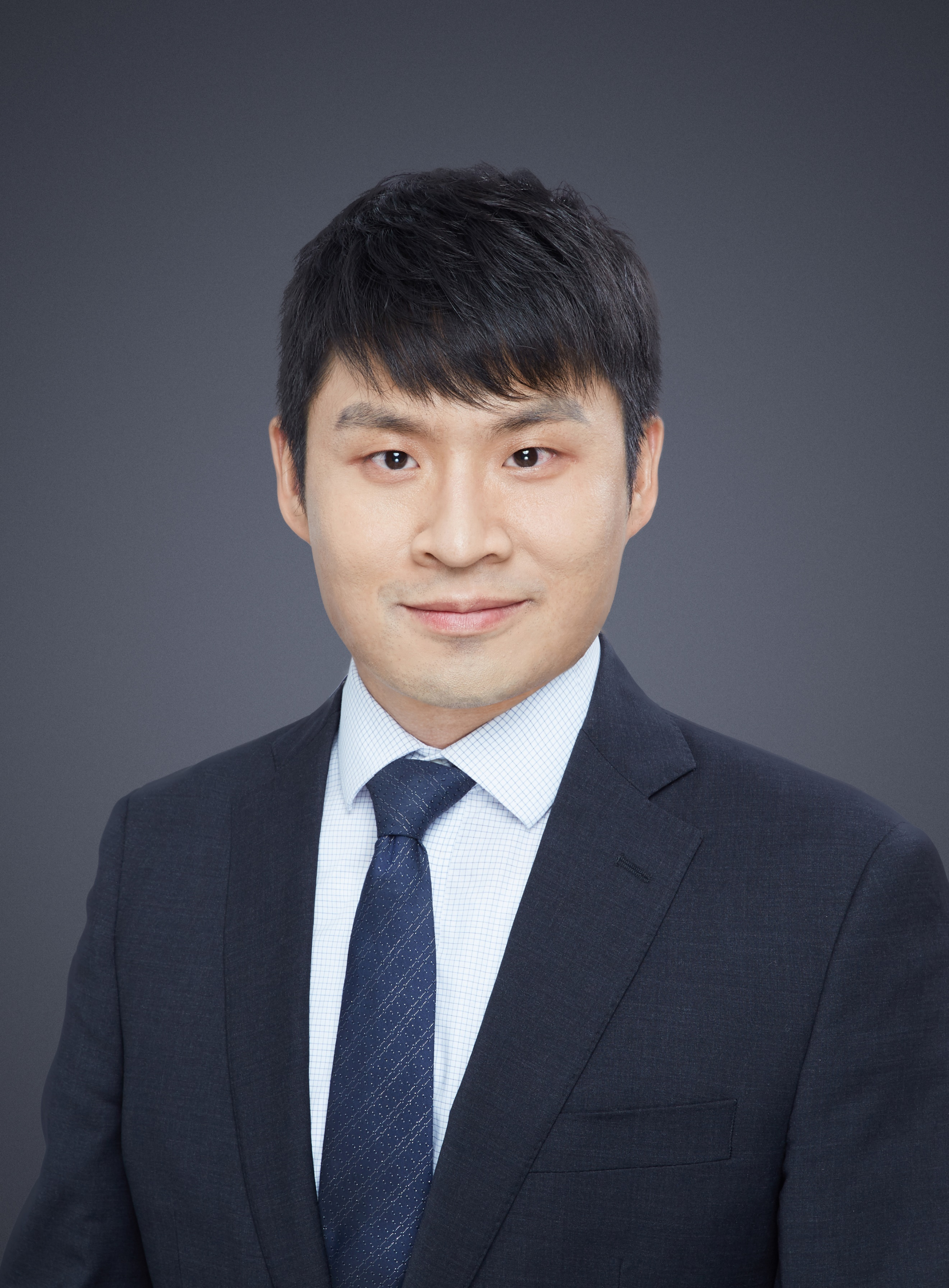
Professor Xinwang Liu Winner of National Natural Science FoundationOutstanding Youth Foundation National University of Defense Technology (NUDT), China | Biography: Xinwang Liu is a Professor and Doctoral Supervisor at the College of Computer Science, National University of Defense Technology, and a recipient of the National Science Fund for Distinguished Young Scholars (2023) and the Excellent Young Scientists Fund (2019). He serves as the Principal Investigator for Key Projects of the NSFC and the Sci-Tech Innovation 2030 Major Project, and is a core member of the NSFC Innovative Research Group. Focusing on machine learning and data mining, Professor Liu has published over 200 papers in CCF-A journals and conferences, including 30 in IEEE T-PAMI (with 3 as the sole author), and has garnered over 20,000 Google Scholar citations, ranking among the World's Top 2% Scientists for three consecutive years (2022–2024). His extensive research achievements have earned him numerous prestigious accolades, including the First Prizes of the CCF Natural Science Award (2025, ranked 1st), Wu Wenjun AI Natural Science Award (2024, 1st), and Beijing Science and Technology Progress Award (2024, 2nd), along with multiple Hunan Provincial and CSIG Natural Science Awards. Furthermore, he serves as an Associate Editor for leading international journals such as IEEE T-KDE, IEEE T-NNLS, and IEEE T-CYB, and acts as an Area Chair for premier international conferences including ICML and NeurIPS. Speech Title: SimpleMKKM: Simple Multiple Kernel K-means Abstract: This presentation introduces the SimpleMKKM clustering framework recently proposed by our research group, along with its related extensions. First, in contrast to conventional min-min or max-max clustering algorithms, we propose a novel min-max model and design a new optimization algorithm that guarantees a globally optimal solution. This hyperparameter-free model has demonstrated superior clustering performance across various applications. Building upon this foundation, we extend the framework by incorporating the concept of local kernel matrix alignment, proposing a localized SimpleMKKM algorithm. Furthermore, we introduce a parameter-free, sample-adaptive localized SimpleMKKM algorithm. All related source code is open-sourced at https://xinwangliu.github.io/. |

Professor Guan Gui IEEE Fellow Nanjing University of Posts and Telecommunications, China | Biography: Guan Gui (Fellow, IEEE) received his Ph.D. degree from the University of Electronic Science and Technology of China, Chengdu, China, in 2012. From 2009 to 2014, he was a research assistant and postdoctoral research fellow at Tohoku University, Japan. From 2014 to 2015, he was an Assistant Professor at Akita Prefectural University in Japan. Since 2015, he has been a Professor at Nanjing University of Posts and Telecommunications, China. His research focuses on intelligent sensing and recognition, intelligent signal processing, and physical layer security. Dr. Gui has authored over 200 IEEE journal and conference papers and received several best paper awards, including at ICC 2017, ICC 2014, and VTC 2014-Spring. He is a fellow of IEEE, IET, and AAIA, and he is recognized for his contributions to intelligent signal analysis and wireless resource optimization. Among his accolades, he received the IEEE Communications Society Heinrich Hertz Award in 2021 and was named a Clarivate Analytics Highly Cited Researcher from 2021 to 2024. Dr. Gui is a Distinguished Lecturer for the IEEE Vehicular Technology Society (VTS) and the IEEE Communications Society (ComSoc). He is an editorial board member for several leading journals, including the IEEE Transactions on Information Forensics and Security, IEEE Internet of Things Journal, and IEEE Transactions on Vehicular Technology. Additionally, he serves as the Editor-in-Chief of KSII Transactions on Internet and Information Systems. He has also held prominent roles in international conferences, such as Executive Chair of IEEE ICCT 2023, Executive Chair of VTC 2021-Fall, and Vice Chair of WCNC 2021. Speech Title: Key Technologies for Intelligent Recognition and Efficient Control of Electromagnetic Spectrum Abstract: The electromagnetic spectrum, as a national strategic resource, is an important support for the operation of the information warfare system and the release of combat effectiveness. Precise understanding and efficient control of the electromagnetic spectrum have become key core elements for the overall command and control of the electromagnetic spectrum. At present, China has established an electromagnetic spectrum recognition and control system based on artificial intelligence and framework of OODA, and has made significant progress in this field. However, due to its late start, there are still challenges such as incomplete measurement, unclear recognition, unstable control, and inaccurate evaluation in complex electromagnetic environments. To address the above challenges, the research team, supported by key projects such as the Military Science and Technology Commission and the Natural Science Foundation, has conducted research on key technologies for precise and efficient electromagnetic spectrum recognition and control from three aspects: spectrum measurement, spectrum cognition, and spectrum management. They have designed a technology roadmap based on data, cognition as theprocess, and control as the goal, and have achieved a series of results including datasets, algorithms, software, and hardware, achieving a leap from incomplete measurement, unclear recognition, unstable control, and inaccurate evaluation to complete measurement, clear recognition, stable control, and accurate evaluation. |

Professor Minyi Guo IEEE Fellow Shanghai Jiao Tong University, China | Biography: Dr. Minyi Guo is the Zhiyuan Chair Professor of Shanghai Jiao Tong University, an IEEE Fellow, and an ACM Distinguished Member. His present research interests include parallel/distributed computing, compiler optimizations, big data and cloud computing. He has more than 600 publications in major journals and international conferences in these areas. He received 10 best/highlight paper awards from international conferences including ALSPOS 2017 and ICCD 2018. Dr. Guo also got the national science and technology achievement award in 2019. He was Editor-in-Chief of IEEE Transactions on Sustainable Computing and now is the Transactions Operation Chair of IEEE Computer Society. He won 2023 IEEE Edward J. McCluskey Technical Achievement Award for his contributions to the design and realization of resource-efficient cloud computing. Speech Title:On the Cloud-Native Architectures Abstract: Cloud native is an emerging computing model of cloud computing, which has become the standard for task execution in the new generation of clouds. Cloud native computing decomposes large-scale applications into a large number of small functions, which are encapsulated and run in containers. It has the advantages of on-demand use, fast elasticity, and has great potential for applications in AI reasoning, graph computing, scientific computing, and other fields. This talk mainly introduces the concept of cloud native, what is the architecture of cloud native, the challenges and issues in the system, framework, and support layers, and finally introduces a complete cloud native system we have built, including the framework, scheduling, and support layers. The above technologies will significantly improve cloud native performance and promote the rapid implementation of this technology. |

Professor Yan Qiao Co-founder, Chief Scientist, IKAS Holdings (Beijing) Co., Ltd., China | Biography: He has published over 140 academic papers, including more than 100 journal papers (60 published in IEEE Transactions, such as T-ASE, T-SMC, T-EVC, T-II, etc.). He holds 17 international patents (including 8 U.S. patents). He was the recipient of the Second Prize of Jiangxi Provincial Science and Technology Award, the Third Prize of Macao Science and Technology Award, Hsue-shen Tsien Paper award of IEEE/CAA Journal of Automatica Sinica, Best Paper Award in Application of IEEE International Conference on Networking, Sensing and Control, Best Semiconductor Manufacturing Automation Paper in Application by Technical Committee on Semiconductor Manufacturing Automation of IEEE Robotics and Automation Society. He has led the development of a semiconductor equipment simulation platform and intelligent equipment scheduling algorithms, covering key wafer fabrication processes, such as PVD, CVD, etching, and cleaning, which have been successfully deployed in leading semiconductor equipment companies. He serves as an Associate Editor of the IEEE Robotics and Automation Magazine. Speech Title: Scheduling and control of cluster tools in semiconductor manufacturing Abstract: The rising complexity of semiconductor chip manufacturing processes has increased the difficulty of process adaptation. The key for improving the productivity of semiconductor manufacturing systems and ensuring the product yield is the scheduling and control of cluster tools, which have been widely applied in semiconductor manufacturing. This report discusses critical issues in the scheduling and control of cluster tools, including real time scheduling under uncertain environments, reentrant process optimization, and fault response methods. In addition, it presents practical implementation solutions through real world application cases. Finally, future research directions in semiconductor equipment scheduling are explored. |

Professor Xiangnan He Winner of National Natural Science FoundationOutstanding Youth Foundation University of Science and Technology of China, China | Biography: Dr. Xiangnan He is a Professor and Associate Dean of the School of Artificial Intelligence at the University of Science and Technology of China (USTC), a recipient of the National Outstanding Youth Fund. His research interests span information recommendation and mining, large models, and artificial general intelligence. He has published over 100 papers in leading international conferences (including SIGIR, WWW, and KDD) and top-tier journals (such as IEEE TKDE and ACM TOIS), and has been recognized as an Elsevier Highly Cited Chinese Researcher, with Google Scholar citation over 70,000 times. His honors include the Best Paper Award at SIGIR and ICLR, the Frontier Science Award at the International Congress of Basic Science, the Alibaba DAMO Academy Young Scientist Award, the CCF Young Scientist Award, and the Asian Young Scientist Award, etc. He serves as Associate Editor for several prestigious journals, including IEEE TKDE, IEEE TBD, and ACM TOIS, and has led multiple national-level research projects, such as key programs of the NSFC and National Key R&D Programs of the Ministry of Science and Technology. Speech Title: Large Model Personalization: Frontiers and Outlook Abstract: With the breakthroughs of large language models in general intelligence, they have demonstrated powerful cognitive capabilities in understanding, generation, decision-making and other dimensions. However, general-purpose large models still face substantial challenges in satisfying individualized demands and scenario-specific tasks. Enabling large models to "understand individuals" and realize deep adaptation to users, organizations and even industries has become a key issue in promoting the practical application of artificial intelligence. This talk will review the core progress and cutting-edge challenges of large models in the field of personalization, focusing on the key technologies of personalized large models, including such innovative ideas as efficient fine-tuning for personalized data, dynamic modeling and retrieval mechanisms for long-term memory, agentic frameworks for complex tasks, and controllable model editing for knowledge updating. Finally, the future directions of personalized large models are prospected, including reinforcement learning-driven adaptive optimization, cloud-edge collaborative privacy-preserving computing, and continuously evolving multi-agent collaboration systems. |

TBD...